
How Does Flex PCB Manufacturing Influence Product Performance?
Flex PCB Manufacturing Influence Product Performance
In today’s fast-paced world of high-speed electronic devices, signal integrity is a crucial factor in the successful operation and performance of any PCB-based system. Signal degradation can cause delays and distortions that lead to data corruption, resulting in reduced system performance or even complete system failure. Addressing signal integrity concerns through careful design considerations, simulation and testing is critical to the success of high-speed flex circuits.
The manufacturing process of a flex pcb manufacturing involves several precise and intricate steps, including the creation of a photographic film that serves as a template for the circuit pattern and the application of copper layers. The copper is then etched into the polyimide substrate, and features like stiffeners and coverlays are added to support the flex circuit and provide insulation. The finished flex circuits are then tested to ensure functionality and integrity.
Flex circuits require innovative materials that can withstand bending and twisting without damage, a crucial requirement for wearable electronics and other flexible displays. They must also withstand environmental conditions such as extreme temperature fluctuations and repel moisture, while providing optimal conductivity and strength. In addition, new flex circuit materials should minimize the environmental footprint through lower energy consumption in production and use of renewable resources.
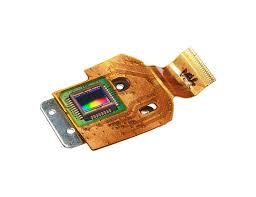
How Does Flex PCB Manufacturing Influence Product Performance?
Cost optimization is another major consideration for flex circuit manufacturers, especially in the development of high-speed designs that have stringent signal integrity requirements. To reduce costs, a number of different options are available to designers, including the selection of the type and thickness of the PCB material, layer count, efficient panel utilization, type of stiffeners and surface finish. Using a manufacturer calculator such as the one from PCBway can help to determine the best cost-optimal solution for a specific project.
The type of copper foil used for the flex circuit layers is another significant factor in cost and signal integrity. Solid copper shield layers offer excellent shielding, but they are less flexible than cross-hatched copper. A good choice is to use a combination of solid and cross-hatched copper for the conductive layers, as this can result in better flexibility and shielding without sacrificing performance.
Choosing the right coverlay and solder mask can save on manufacturing costs as well, although this does depend on the complexity of the circuit board. In general, higher layer counts and more complex designs will increase the price. In order to maximize cost efficiency, a specialized design can be split into smaller sections and run in batches, as this will decrease the overall cost of each part while still maintaining quality standards.
Stiffeners are typically made from a rigid material such as aluminum, and they are attached to the flex circuit with either a thermally bonded acrylic adhesive or pressure-sensitive adhesives. They are designed to relieve stress, balance weight and heat dissipation, and reinforce solder joints, which is an important consideration for applications such as medical devices or aerospace systems.
For high-volume production, the flex circuits are cut with a hydraulic punch and die set, which requires relatively expensive tooling. For prototypes and low-volume runs, a blanking knife is used.