
How has printed circuit board and assembly evolved over time?
printed circuit board and assembly evolved over time
The evolution of printed circuit boards (PCBs) and assembly has been a remarkable journey marked by significant technological advancements and innovations. From their humble beginnings as simple single-sided boards to the complex multi-layered structures used in today’s high-performance electronic devices, PCBs have undergone a transformative evolution that has revolutionized the electronics industry.
The origins of printed circuit board and assembly can be traced back to the early 20th century when electrical engineers sought more efficient ways to interconnect electronic components. Prior to PCBs, electronic circuits were assembled using point-to-point wiring, which was labor-intensive, prone to errors, and limited in terms of scalability and reliability. The introduction of PCBs in the 1940s revolutionized electronic assembly by providing a stable platform for mounting and interconnecting components, thereby streamlining production and improving reliability.
The earliest PCBs were simple single-sided boards made of Bakelite or other phenolic resins, with copper traces etched onto one side. These boards were primarily used in radio and television sets, offering a cost-effective and efficient solution for electronic assembly. However, as electronic devices became more complex and compact, the demand for more advanced PCBs grew, leading to the development of multi-layered PCBs.
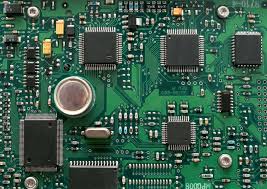
How has printed circuit board and assembly evolved over time?
The evolution of PCBs from single-sided to double-sided and multi-layered structures was a significant milestone in the history of electronic assembly. Multi-layered PCBs, which consist of multiple layers of conductive traces separated by insulating layers, enabled higher component density, improved signal integrity, and enhanced functionality in electronic devices. This advancement paved the way for the miniaturization and integration of electronic systems, driving innovation across various industries.
In parallel with the evolution of PCBs, PCB assembly techniques have also undergone significant advancements over time. Traditional through-hole assembly techniques, which involve inserting component leads through holes in the PCB and soldering them to the opposite side, were commonly used in the early days of PCB assembly. However, as electronic components became smaller and more densely packed, surface mount technology (SMT) emerged as a more efficient and cost-effective alternative.
SMT, which involves mounting components directly onto the surface of the PCB, offered numerous advantages over through-hole assembly, including higher component density, reduced assembly time, and improved electrical performance. This transition to SMT revolutionized PCB assembly, enabling the production of smaller, lighter, and more sophisticated electronic devices. Furthermore, advancements in soldering techniques, such as reflow soldering and wave soldering, further enhanced the efficiency and reliability of PCB assembly processes.
The advent of automation and robotics has also played a significant role in the evolution of PCB assembly, enabling high-speed and high-precision assembly of electronic components. Automated assembly lines equipped with pick-and-place machines, solder paste dispensers, and inspection systems have greatly improved production efficiency, consistency, and quality control in PCB manufacturing.
Moreover, the ongoing advancements in materials science and manufacturing technologies continue to drive innovation in PCB design and assembly. New materials such as flexible substrates, high-frequency laminates, and conductive inks are expanding the possibilities for PCBs in applications ranging from wearable electronics to aerospace systems. Additive manufacturing techniques, such as 3D printing, are also being explored for rapid prototyping and custom PCB production.
In conclusion, the evolution of printed circuit boards and assembly has been a story of continuous innovation and progress. From their inception as simple single-sided boards to the sophisticated multi-layered structures and advanced assembly techniques used today, PCBs have played a vital role in shaping the modern electronics industry. As technology continues to advance, PCBs will undoubtedly remain at the forefront of innovation, driving the development of next-generation electronic devices and systems.