
Prevent Solder Balling During Pcb SMT Assembly
Balling During Pcb SMT Assembly
During the pcb smt assembly process, solder balls can form for many reasons. Whether it’s an issue with the printing stencil, or problems during component placement or reflow, each link in the process can contribute to the final formation of solder balls. Fortunately, there are steps that can be taken to minimize these defects.
Stencil printing problems are a common cause of solder balling, particularly when the stencil opening ratio is incorrect. This can lead to paste expulsion around the component pads, which can then cause a short in the circuit board. Other issues such as excessive print pressure and misregistration can also lead to excess paste expulsion, which can then lead to solder ball formation.
The reflow temperature profile can also have an impact on the formation of solder balls. The heating ramp, peak temperature, and cooling rate of the reflow process should all be optimized to minimize this issue. Additionally, the use of a no-clean flux can help reduce the number of solder balls that are formed due to residues.
Another common cause of solder balling is incorrectly spaced component leads and pads. This can lead to solder bridging between adjacent pads, which is a common cause of electrical shorts and product malfunctions. This problem can be easily prevented by ensuring that components are correctly spaced according to design guidelines provided by the component manufacturer.
Stencil cleanliness is also critical to prevent solder balling. The stencil must be cleaned regularly to remove excess paste and debris from the apertures. A well-maintained stencil will also have a lower risk of flux residue buildup, which can lead to solder ball formation. In addition, using a high-quality solder paste that is low in oxide can also help to avoid this issue.
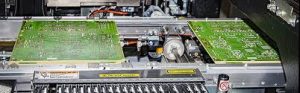
Prevent Solder Balling During Pcb SMT Assembly
The preheat temperature of the reflow oven is also a critical factor in preventing solder balling. Too much heat can damage the flex solvent and cause it to evaporate too quickly, which can then lead to solder balling. Ensure that the preheat temperature is increased gradually and slowly.
Lastly, the cooling rate of the PCB after reflow is also important in avoiding solder balling. If the board cools too rapidly, it can prevent the molten solder from properly wetting the pads and creating a strong joint. On the other hand, if the PCB cools too slowly, it can lead to excess solder flow and a higher chance of solder ball formation. By implementing these best practices, EMS manufacturers can avoid solder balling and ensure quality products every time.
PCB design for SMT requires precise pad layout and consideration of component placement to avoid issues like tombstoning or solder bridging. The dense packing of components can lead to thermal management issues. Efficient heat dissipation techniques are necessary to prevent overheating and ensure reliable operation. The small size of SMDs makes them difficult to handle manually, requiring sophisticated automated equipment.
The automation capabilities in SMT assembly enable high-speed production, which is crucial for meeting the demands of mass production. Pick-and-place machines and automated inspection systems contribute to rapid and accurate assembly processes. SMDs have lower parasitic inductance and capacitance compared to through-hole components, leading to better performance at high frequencies. This makes SMT ideal for high-speed and high-frequency applications.