
What is a Piano Transcription in Classical Music?
Piano Transcription in Classical Music
In classical music a piano transcription is an arrangement of a piece written for another instrument or ensemble such as orchestra, string quartet, choir etc. The aim of a transcription is to make the piece playable on the chosen instrument, using the technical skills of the composer. This is often done to achieve the same effect as an original work written for a particular instrument, but without the cost of having to hire all the necessary musicians.
Many conservatories require students to learn a number of pieces through transcribing, either as a part of their coursework or in addition to learning from their teachers. For those who do not already have this skill it is a highly beneficial exercise which can help develop both their musicianship and the proficiency of their instruments.
If the goal is to transcribe an entire solo it is important to listen attentively and to try to map out the structure of the piece in some way. This can be as simple as making notes of where different parts occur, for example if there is a change in harmony or rhythm that occurs in more than one place then listening to it again and writing down what occurs where could help to clarify the issue.
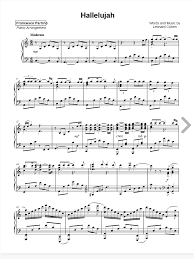
What is a Piano Transcription in Classical Music?
The great jazz pianist and teacher Lennie Tristano would often have his students spend a lot of time with just one solo, insisting that they could really understand what was going on, not simply how to play the chord changes. He also wanted to get his students to focus on the quality of sound, ie what makes the sounds produced by the piano specific (pitch, scoops and bends, articulation, dynamics) as opposed to a list of notes.
Obviously the more precise and accurate a transcription is the better, but this may not always be possible depending on what it is being used for. If, for example, the transcribed part is being used in an arrangement for a guitar or any other instrument it may be acceptable to leave out some chords and just focus on getting the key and melody as close as possible.
When transcribing music it is very useful to have a musical calculator on hand so that you can determine the number of harmonics of a given tone. For example Middle C on the piano has a fundamental frequency of 261.6 Hz and each successive harmonic is an integer multiple of this, for instance 523 Hz, 785 Hz and 1046 Hz.
When transcribing it is also a good idea to keep a playback of the piece on hand so that you can check your transcription against the original. It is very easy to miss things when transcribing and it is always worth double checking your work to see that you have got it all right. If you are transcribing for your own performance then it is a good idea to have an instrument close by so that you can constantly check your work and ask yourself if it really does sound like the original.