
What role do printed board assembly play in the Internet of Things (IoT)?
role do printed board assembly play
The Internet of Things IoT is a network of devices that connect and share data. It has transformed everyday objects like cars, medical equipment and household appliances into smart gadgets that help streamline operations at a massive scale. The underlying technology behind these products, however, is a complex system of interconnected pathways known as the printed circuit board (PCB).
A printed board assembly is flat piece of non-conductive material that comes to life when it gets populated with electronic components such as microcontrollers, sensors and communication modules. These components are then precisely soldered onto the board to create a seamless network of interconnected pathways. Despite being relatively unobtrusive, the PCB is at the heart of every IoT device and it takes careful attention to ensure proper operation.
As IoT devices become increasingly compact, PCB assembly is becoming an ever-more challenging process. Fortunately, innovative technologies such as multi-layered PCBs and precision soldering techniques are helping to overcome these challenges.
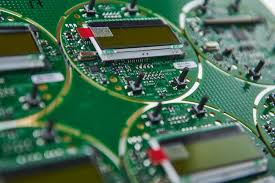
What role do printed board assembly play in the Internet of Things (IoT)?
One of the key issues facing IoT PCBs is miniaturization, a challenge that demands precise attention to power consumption and wireless communication. The PCB must be able to transmit data quickly and efficiently, while remaining small enough to fit into the tight space constraints of IoT devices. This means incorporating effective thermal management strategies and the use of advanced surface mount technology to eliminate hot-spots.
In addition, IoT PCBs need to be able to conserve battery power by turning off parts of the device that aren’t in use. This requires strategic planning of the power budget for each functional block on a PCB and the use of power-regulating ICs to ensure each block remains within its budget.
IoT PCBs also require a high degree of reliability. This requires an extensive QC process to check the quality of all the electrical connections and ensure there are no flaws in the wiring. The QC process usually involves visual inspection and electrical testing.
Lastly, IoT PCBs need to remain rugged and durable. This is especially important for IoT devices that are exposed to harsh environments. In this case, flex and rigid-flex PCBs offer enhanced durability and flexibility to withstand vibrations, impacts, humidity and temperature fluctuations.
In summary, the role of IoT PCBs in the Internet of Things is more important than ever before. From healthcare and transportation to industrial applications, IoT is transforming traditional devices into smart gadgets that will make our lives more efficient and safer. It all begins with a robust PCB assembly process that can keep up with the demand for IoT devices while maintaining a high level of quality. This is only possible thanks to cutting-edge manufacturing techniques and a dynamic collaboration between leading PCB manufacturers and IoT designers.