
What types of equipment are used in Flex pcb supplier?
Flex pcb supplie
Flex PCB (Flexible Printed Circuit Board) suppliers rely on a range of specialized equipment to facilitate the manufacturing process, ensuring precision, efficiency, and quality in the production of flexible circuits. These equipment types encompass various stages of Flex PCB manufacturing, from design and layout to material preparation, fabrication, assembly, and quality control. The equipment used by Flex PCB suppliers includes but is not limited to computer-aided design (CAD) software, laser cutting machines, laminators, photolithography equipment, etching machines, drilling machines, soldering stations, and inspection systems.
CAD software is a fundamental tool used by Flex PCB suppliers during the design and layout phase. This software enables engineers to create detailed schematics and layouts of the flexible circuits, incorporating complex geometries and precise dimensions. CAD software allows for the visualization and simulation of the circuit design, facilitating the identification of potential issues and optimization of the layout before moving to production. Advanced CAD software also integrates with other manufacturing equipment and processes, streamlining the entire production workflow.
Laser cutting machines are utilized in Flex PCB suppliers to precisely cut flexible substrates to size. These machines use focused laser beams to cut through materials such as polyimide or polyester films with high accuracy and minimal heat-affected zones. Laser cutting is ideal for creating intricate shapes and patterns required in Flex PCBs, allowing for precise customization and optimization of the flexible circuits. Laser cutting machines offer flexibility in terms of cutting speed, depth, and resolution, making them indispensable tools in the fabrication process.
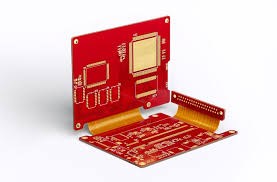
What types of equipment are used in Flex pcb supplier?
Laminators are essential equipment used in Flex PCB manufacturing to bond multiple layers of flexible substrates together. These machines apply heat and pressure to the layers, ensuring strong adhesion and electrical continuity between them. Laminators are equipped with precision controls to maintain consistent temperature and pressure throughout the lamination process, preventing defects such as air bubbles or delamination. They are used to create multi-layer Flex PCBs with varying thicknesses and material compositions, catering to diverse application requirements.
Photolithography equipment is employed in Flex PCB manufacturing to define the circuit patterns on the flexible substrate. This equipment includes exposure units, aligners, and developing stations. Photolithography begins with coating the substrate with a photosensitive resist material, followed by exposure to ultraviolet light through a mask that defines the circuit pattern. The exposed areas are then developed to reveal the circuit design. Photolithography equipment requires precise calibration and maintenance to ensure accurate reproduction of circuit patterns and minimize defects.
Etching machines are used to selectively remove unwanted copper from the flexible substrate, leaving behind the desired circuit pathways. These machines use chemical etchants to dissolve the exposed copper, while the areas protected by the resist remain intact. Etching machines must be carefully controlled to ensure uniform etching and precise definition of circuit features. Advanced etching techniques, such as spray etching or plasma etching, offer greater control over the etching process and allow for finer resolution of circuit patterns.
Drilling machines are employed in Flex PCB manufacturing to create holes for vias and component mounting. These machines use precision drills to accurately penetrate the flexible substrate without causing damage. Laser drilling machines are commonly used for their ability to create small, precise holes with minimal heat-affected zones. Drilling machines are equipped with automated controls to ensure consistent hole sizes and placements across the flexible substrate, facilitating the assembly of complex multi-layer Flex PCBs.
Soldering stations are essential equipment used in Flex PCB assembly to mount electronic components onto the flexible circuits. These stations include soldering irons, solder paste dispensers, reflow ovens, and wave soldering machines. Soldering stations must provide precise temperature control to prevent damage to the flexible substrate and components. Automated soldering equipment, such as pick-and-place machines and reflow soldering systems, offer efficiency and accuracy in component placement and soldering, ensuring reliable electrical connections and mechanical stability.
Inspection systems are employed throughout the Flex PCB manufacturing process to detect and rectify defects. These systems include automated optical inspection (AOI), X-ray inspection, and electrical testing equipment. AOI systems use high-resolution cameras and image processing software to scan the flexible circuits for visual defects such as misaligned components, solder bridges, or trace discontinuities. X-ray inspection is used to examine solder joints and internal layers for hidden defects. Electrical testing equipment verifies the integrity of the circuit paths and ensures that the Flex PCBs meet specified performance criteria.
In conclusion, Flex PCB suppliers rely on a diverse range of equipment to facilitate the design, fabrication, assembly, and quality control of flexible printed circuit boards. From CAD software and laser cutting machines to laminators, photolithography equipment, etching machines, drilling machines, soldering stations, and inspection systems, each piece of equipment plays a vital role in ensuring the precision, efficiency, and reliability of the Flex PCB manufacturing process. By leveraging advanced technologies and meticulous quality control measures, Flex PCB suppliers can meet the demanding requirements of various industries and deliver high-quality flexible electronic solutions.